2008 - Age of Awakening / 2016 - Age of disclosures / 2021 - Age of Making Choices & Separation / Next Stage - Age of Reconnection and Transition! /
2024 - Two millenia-old Rational Collectivist societal cycle gives way to the Self-Empowered Individualism. /
2025 Golden Age begins
Global narratives and "theories of everything" are always false! Only Personal Narrative is true!

Thursday, January 17, 2013

Prosocialites vs neurotics

.

In my previous articles I wrote about a theory postulating that our human ancestors broke away from a "herd of apes" collectivistic lifestyle.  Escaping out of a jungle "paradise" where no work was necessary for acquiring food but social interplay and obedience to herd hierarchy and the group authority was paramount for survival  [Sapolsky 1 and 2 ], meant a change over from the collectivistic towards an individualistic nomadic lifestyle.  The lifestyle where one's survival depended more on the individual foraging, hunting and toolmaking skills, as well as one's ability to construct shelters and make warm clothing.    Human development meant shift from social herd animal to industrious self-reliant individual.  It does not mean shift from social life to a complete absence of social life but it does mean interacting with smaller and more mobile groups that is characterized by less rigidity, less formal hierarchy and exhibits flexible social interactions.

The following recent study has illustrated this surprisingly well:


According to a report summarizing years of research, the Big Five – which include openness, conscientiousness, extraversion, agreeableness,   and   neuroticism – may be a culturally driven model that only really holds true for people in developed, western countries.
...
In his paper, UCSB anthropology professor Michael Gurven details how he and his team were unable to apply the Big Five model to the indigenous hunter-gatherer Tsimane people. Instead, they report, the personalities of the Tsimane appear to be characterized by a “Big Two” pair of traits – prosociality  and  industriousness. And while they report that these Big Two appear to combine certain elements of the Big Five that are used to describe Americans and Europeans, these two core personality traits seem to be a reflection of features that are specific to highly social, subsistence-based societies.

(Note: color highlights are mine)

The fact is, modern academic social science has blown up the pro-social (collectivistic) trait into multiple sub-categories, such as "openess", "consentiousness", "extrovertion" and "agreeableness".  Unsurprizingly, given who they are, the social scientists have shoved the entire multiverse of individualistic traits and skills into just one bin called "neuroticism"!  Why didn't they just call them "nerds" instead?

This study tells us that the social scientists and probably a majority of the society (4 out of 5 perhaps?) has devolved a "stuck in the past" mindset that considers collectivistic prosocial traits of more relevance than the "industriousnes" - pardon "neuroticism".   This is in stark contrast to the stone age people like the Tsimane tribe, whose "industrious" members are described with relevant word, while their pro-social members are bunched into one category rather than splitting them into different party-going monkey categories.

Stan (Heretic) aka Nerd

Wednesday, January 9, 2013

Anti-oxidants may promote rather than fight cancer!

.

Hold off those berries and vitamins, suggests DNA discoverer James Watson, in today's article titled "DNA pioneer James Watson takes aim at 'cancer establishments'" article.

From wiki

Quotes:
On the $100 million U.S. project to determine the DNA changes that drive nine forms of cancer: It is "not likely to produce the truly breakthrough drugs that we now so desperately need," Watson argued. On the idea that antioxidants such as those in colorful berries fight cancer: "The time has come to seriously ask whether antioxidant use much more likely causes than prevents cancer."

...

That is why Watson advocates a different approach: targeting features that all cancer cells, especially those in metastatic cancers, have in common.

One such commonality is oxygen radicals. Those forms of oxygen rip apart other components of cells, such as DNA. That is why antioxidants, which have become near-ubiquitous additives in grocery foods from snack bars to soda, are thought to be healthful: they mop up damaging oxygen radicals.

That simple picture becomes more complicated, however, once cancer is present. Radiation therapy and many chemotherapies kill cancer cells by generating oxygen radicals, which trigger cell suicide. If a cancer patient is binging on berries and other antioxidants, it can actually keep therapies from working, Watson proposed.

"Everyone thought antioxidants were great," he said. "But I'm saying they can prevent us from killing cancer cells."


Saturday, January 5, 2013

Refined Grains & Desserts diet 50% worse than Fast Food diet!

.
50% more T2 diabetes in a group following the "Refined Grains and Desserts" dietary pattern (the highest carbohydrate consumption group) than in the followers of Fast Food dietary pattern (the highest fat consumption group) as showed in a new study on Lebanese. The latter group had in turn worse risk (four times as much) as the Traditional Lebanese dietary pattern, which had the lowest carbohydrate intake and medium fat intake (but the highest monounsaturated fat - olive oil, of all).

"Dietary patterns and odds of Type 2 diabetes in Beirut, Lebanon: a case-control study", Farah Naja et al., Nutrition & Metabolism 2012, 9:111

[added 6-Jan-2013]

Interestingly, when their correlation coefficients from Table 3 are plotted against the T2 diabetes odds ratio, it turns out that the only food related factor that has a positive strong linear trend with diabetes risk, is the dietary energy intake! See a blue line in the chart below. None of the macronutrients trended as strongly (if at all), with the T2 diabetes risk. There are only some weak non-significant trends with carbohydrates (positive, that is more carbs = more risk) and protein intake (negative, that is more protein = less risk). One can of course ask the question why exactly did the group with refined grains and desserts pattern tended also to overeat and whether that is caused by the diet itself, or is the propensity towards overeating the primary factor (caused by what?) while some particular dietary choice may be a response to that? I am not sure. I have to say, this results is somewhat surprising.

Another interesting conclusion one can draw, is that the study seems to support the mitochondrial damage hypothesis of T2 diabetes, since the energy overload is the primary trigger!

Click on this to view the spreadsheet.

The relatively low diabetes risk associated with the high meat (and eggs) and alcohol diet is also very revealing.  The Meat and Alcohol result does not really tell us what causes diabetes but it does tell us what does not cause it!

[7/01/2013]

Wheat seems to be a toxic plant!  

I think this study (alongside many others, for example China Study ) implicates wheat as the primary cause of diabetes, stronger than all the other dietary factors!  It probably acts through appetite enhancing or satiety suppressing, leading to overeating.  If true, this is a very important conclusion!   Worth probably a trillion dollars of American GDP!

Heretic


Thursday, December 27, 2012

9 times less atherosclerosis now than 60y ago!

.
http://www.forbes.com/sites/larryhusten/2012/12/25/autopsy-studies-find-large-and-dramatic-drop-in-early-atherosclerosis-over-60-years/

Bryant Webber and colleagues analyzed autopsy reports and available health data from 3,832 service members who died of combat or unintentional injuries in Afghanistan and Iraq and compared their findings to similar studies performed during the Korean and Vietnam wars. 8.5% of the newest group had evidence of coronary atherosclerosis, compared with 77% in the Korean War group and 45% in the Vietnam War group.

Any idea why? Less crisco/margarine?
And this is strange:


...
Surprisingly, cigarette smoking was not significantly associated with atherosclerosis in this study.

.

Tuesday, December 18, 2012

Mass murderer was vegan

.

http://www.salon.com/2012/12/17/adam_lanza_was_a_vegan/

Another small detail emerged in the course of the interview, this time about Adam Lanza. Lanza was vegan, according to Hanoman, because he "didn’t want to hurt animals."
.

Wednesday, November 28, 2012

Milk and butter are good for you!

.
"India's poster boy for vegetarianism – he's just fathered a child at 96" (2012)

Quote:
He has been a strict vegetarian and has never drank alcohol. Instead, his diet is made up of fresh milk, clarified butter, vegetables and chapattis.

The Independent TUESDAY 27 NOVEMBER 2012

More details from another article (John, thanks!) :

"At 94, Indian Ramjit Raghav Is World’s Oldest Father" (2010)

My daily diet comprises three litres of milk, half a kilo of almonds and half a kilo of ghee [clarified butter].

Note: ~800g of pure fat or 7200kCal seems too much fat for 1 person. I suspect this amount must be for the entire family! For instance, my fat intake is only about 100-200g a day.

More longevity surprize (different man, Nanu Ram Jogi):

"World's oldest father has 21st child at 90" (2007)

Quote:

Mr Jogi, who attributes his remarkable virility to daily walks and plenty of meat, said: "I eat all kinds of meat - rabbits, lamb, chicken and wild animals."

.

Sunday, November 25, 2012

Ketogenic diet slows progression of cancer...

...in 5 out of 9 patients who exhibited the highest degree of ketosis measured by a level of beta hydroxy butyrate.

The degree of cancer progression slow down or remission correlated with the degree of ketosis and degree of ketosis correlated inversely with the level of insulin.

The study lasted 26-28 days and involved only nine patients who completed the study, all of whom begun with rapidly progressing advanced and incurable cancers.

Fig 2 (part, 1 out of 4 graphs) from the study. β-OH butyrate
(beta hydroxy butyrate) represent a degree of ketosis.

"Targeting insulin inhibition as a metabolic therapy in advanced cancer: A pilot safety and feasibility dietary trial in 10 patients", Eugene J. Fine et al., Nutrition, 1028-1035,2012

Comments:

It is interesting to note that, contrary to a myth about keto diets being supposedly harmful for kidneys,  not only it did not worsen the markers, but improved kidney filtration of one of the patients!

It is important to keep in mind that stopping of a disease progression is not the same as curing it. Ketogenic diet seems to help but I do not consider it to be a universal cure for cancer (it does however cure t2 diabetes!).

Heretic

Friday, November 23, 2012

Higher stroke risk for vegetarians who exercise vigorously!

.
This is part of a conclusion obtained from a recent Taiwanese research (thanks Dav0). The following Taipei Times article discusses the results:

Local researcher provides formula to predict strokes

Quotes:

After analyzing the medical records of 500,000 people, National Health Research Institute researcher Wen Chi-pang (溫啟邦) found that there are five main factors that affect the probability of a stroke: if a person is a smoker, a vegetarian, or overweight, and if they exercise to either extreme or drink alcohol.
...
For example, a 60-year-old male vegetarian with normal body weight, who smokes, drinks and does not exercise, would have an 11.1 percent chance of suffering a stroke in the next 10 years, Wen said. The probability would soar to 84.7 percent if the man is also overweight and exercises vigorously.
...
While the ideal cholesterol level for people is between 200mg per deciliter and 300mg per deciliter, studies in Taiwan and abroad show that vegetarians usually have a level of below 130mg per deciliter — which makes them twice as likely as those with an ideal level to suffer a hemorrhagic stroke, he said.
A reading of 160mg per deciliter means a person will have a 50 percent higher chance of suffering a hemorrhagic stroke than those who do not, the researcher said. Vegetarians tend to have lower cholesterol levels because they lack certain nutrients obtained from meat, he said. This does not just increase their chances of stroke, but also of developing cancer, he added.

Tuesday, October 30, 2012

Lower LDL cholesterol = more heart failure death!

.
Another fascinating paper caught by my friends from a vegan forum - and another chunk of the mainstream medical belief system imploding!  

Note (*)


68% more death in the group with LDL < 71mg/dL (1.8 mmol/L) compared with those > 130mg/dL!

New study "Low-Density Lipoprotein Levels in Patients With Acute Heart Failure" by 
Mark R. Kahn et al., 16 Oct 2012,  found strong rising trend towards higher and higher mortality with lower and lower LDL, in every subcategory of the heart disease etiology or statin/lack of statin treatment. For example, for the total mortality (multivariate statistical analysis), relative mortality risk increased monotonically with lowering of the LDL such as illustrated in the following table:

LDL (mg/dL) Relative
Mortality
 > 130 1.0
101-130 1.16
71-100 1.25
 < 71 1.68
(based on table III in the study)

The study showed a similarly increasing mortality risk with lower LDL, over time, illustrated by the following figures from the paper:


*)  Harvard Medical School building

Monday, October 29, 2012

High carb and low caloric intake from fat and proteins may increase the risk of dementia in elderly!

.
The title is a short version of the concluding sentence from a new Mayo Clinic study. The study tracked 937 initially healthy people aged 70-89 for 3.7 years. During this period 200 developed mild cognitive impairment (MCI) or dementia.

Those patients who were in the highest quartile (i.e. a group) of carbohydrate consumption (as percentage of total calories), have had approximately twice the risk of MCI or dementia (1.89 times, confidence interval P for trend =0.004(*)). Those who belonged to the highest quartile of fat consumption had about one-half the risk of developing MCI or dementia (0.56, P for trend = 0.03(**)). Those with the highest protein intake had 21% lower risk.

The fact that fat, especially saturated seems to be beneficial in dementia and other neurological degenerative diseases, has been known for some time, see for example the references in my past posts: this or this

This study however, is probably one of the first, if not the first, to concentrate on all three macronutrients' intake rather than some partial aspects of the diet.

Quote:

A dietary pattern with relatively high caloric intake from carbohydrates and low caloric intake from fat and proteins may increase the risk of MCI or dementia in elderly persons.

Although the full text is pay-walled, a short writeup is posted on the Mayo Clinic website.

Interestingly, a comparison between the highest quartile of total carbohydrates with the highest sugar (see the quote below), shows that the sugar impact was negative but not to the same extent as the total carbohydrate. This may be indicating that some other form of cabohydrate than the sugar alone, may be the most detrimental to the neurological health. Perhaps the total starch [ *** WHEAT?! ***] or just the total glycemic load?

Those who reported the highest carbohydrate intake at the beginning of the study were 1.9 times likelier to develop mild cognitive impairment than those with the lowest intake of carbohydrates. Participants with the highest sugar intake were 1.5 times likelier to experience mild cognitive impairment than those with the lowest levels.

But those whose diets were highest in fat - compared to the lowest - were 42 percent less likely to face cognitive impairment, and those who had the highest intake of protein had a reduced risk of 21 percent.

When total fat and protein intake were taken into account, people with the highest carbohydrate intake were 3.6 times likelier to develop mild cognitive impairment.

"A high carbohydrate intake could be bad for you because carbohydrates impact your glucose and insulin metabolism," Dr. Roberts says. "Sugar fuels the brain - so moderate intake is good. However, high levels of sugar may actually prevent the brain from using the sugar - similar to what we see with type 2 diabetes."

Wiki 


----------------------
Notes:
(*) It means that the probability of the result being by chance is 1/250.
(**) Probability of the result being by chance is 1/33.
(***) Added 13/01/2013, inspired by this .

(I am grateful and indebted to the best source of alerts about new interesting nutrition studies - vegan discussion groups!  Oh my oh my...  Thank you drmcdougall.com )
.

Saturday, October 20, 2012

Diabetes - low caloric diet and exercise did nothing for heart!

.
A new report from an 11 years long just cancelled study "Look AHEAD", conducted by Dr. David Nathan (principal investigator) is going to be published.

Five thousand diabetes type 2 patients split in two groups, one (treatment group) underwent a rigorous diet (1200-1800kcal - about one half of general average!) and about three hours a week of exercise regimen, the other (control group) were only offered some general health information.

Results: in spite of 5% weight reduction in the treatment group - no difference in cardiovascular death!

See a write-up in NYT:

"Diabetes Study Ends Early With a Surprising Result" by Gina Kolata, October 19, 2012

Quote:
The study randomly assigned 5,145 overweight or obese people with Type 2 diabetes to either a rigorous diet and exercise regimen or to sessions in which they got general health information. The diet involved 1,200 to 1,500 calories a day for those weighing less than 250 pounds and 1,500 to 1,800 calories a day for those weighing more. The exercise program was at least 175 minutes a week of moderate exercise.

But 11 years after the study began, researchers concluded it was futile to continue — the two groups had nearly identical rates of heart attacks, strokes and cardiovascular deaths.

My take on it?

I find it absolutely pathetic but also surprising! Only 5% weight reduction! Same rate of heart disease and stroke after after 11 years of consuming about half the calories of average American adult?!  How is that possible, unless...


     - half of the calories they threw out were in things like animal and dairy fat, fish, yolks and meat, leaving mostly carbs. Carbs - like perhaps those on the picture?

http://en.wikipedia.org/wiki/File:NCI_Visuals_Food_Meal_Breakfast.jpg

More, here are study materials and guidelines for this study ("Look AHEAD" trial):

Look AHEAD Materials

This is hillarious (and oh yes, I was right, breakfast cereals, bread, low fat etc., super "healthy"!):

Healthy Eating

More hillarious:

More About Healthy Eating

Quote from the chapter demolishing the low carb diets:
The Claim [of low carb diets]
You’ll lose weight on the diets because they are low in carbohydrate.

The Truth
You may lose weight on the diets because they contain fewer total calories than most people consume. Most of the diets range from 1000-1800 calories. Also, many cause ketosis. In ketosis, the body breaks down fat stores, producing toxic wastes called ketones. To flush out the ketones, the kidneys pull water from the body. It’s the loss of water, not fat, that results in quick weight loss.

I can't help it, it so so so scientific, it is cracking me up! I need some vegan comments to straighten me up, please please ...
Stan (Heretic)

Saturday, September 8, 2012

Diet high in fat and sugar - neural damage in mice

.
A recent PhD project  of Aberdeen University, using insulin insensitivity and obesity inducing diet diet high in fat and sugar, is finding neurological problems in mice.

Note: see at the end, how it was reported in the media!

Deep-fried Mars bars (wiki)
Quote:
A Targeted Brain Proteomic Study Linking Diet, Ageing and Cognition

Supervisors: Dr Lynda Williams, Dr Rosamund Langston (University of Dundee) and Dr Fiona Campbell

We have recently identified that the gene serpinA3n encoding the acute phase protein alpha-1 antichymotrypsin (aACT) is up-regulated by a diet   
high in saturated fat and sugar   in the hypothalamus and hippocampus of the brain in a widely used mouse model of diet induced obesity and insulin insensitivity (1). Insulin insensitivity and neuronal inflammation are related to cognitive decline. SerpinA3n gene expression also increases with age in mice (Williams et al unpublished results). The function of the protein aACT in the brain has not been completely elucidated but aACT is known to form complexes with apolipoprotein E (ApoE) and protein amyloid β and is an integral component of the plaques found in Alzheimer's disease (2). 

The present project seeks to investigate the role of aACT in the rodent brain. The fate and function of aACT in the brain will be identified using a targeted proteomic approach including co-immunoprecipitation and mass spectroscopy. Hippocampus-dependent memory function will be correlated with brain inflammation and aACT levels using behavioural measures of episodic memory in rodents to investigate the relationship between age, diet, inflammation and cognition.

...

References:

1. Winzell, MS, Ahren, B: The High-Fat Diet-Fed Mouse: a Model of Studying Mechanisms and Treatment of Impaired Glucose Tolerance and Type 2 Diabetes. Diabetes 53 Suppl 3: 5215-5219, 2004.

2. Potter, H, Wefes, IM, Nilsson, LN: The Inflammation-Induced Pathological Chaperones ACT and apo-E are Necessary Catalysts of Alzheimer Amyloid Formation. Neurobiol Aging 22: 923-930, 2001
.

This is how that was reported in the media (I hope you have have fun reading it!):

High-fat diet can damage brain

Fatty Food Might Cause Brain Damage, Suggests Research

Fatty food can lead to brain damage new research shows


Thursday, August 30, 2012

Calorie restriction theory - disproved!

.
I knew there must have been something dodgy about Calorie Restriction theory!  It turns out they badly messed up the original  2009 Wisconsin study by overloading monkeys with sugar!  Not surprizingly - the less of that feed the monkeys ate the better they did!  Gross incompetence! Too bad for those who believed in that theory! Too late for Dr. Roy Walford and probably for many many others like him!


Rhesus macaque (wiki)

In contrast to that, the new just published study in "Nature" used a healthier diet over 25 years. The result was that the calorie restricted monkeys had more disease, by about 40% more (see the graph below)  than the control group!

Calorie restriction falters in the long run.
Genetics and healthy diets matter more for longevity.


Quotes [green comments inserted by me]:

The verdict, from a 25-year study [NIA study] in rhesus monkeys fed 30% less than control animals, represents another setback for the notion that a simple, diet-triggered switch can slow ageing. Instead, the findings, published this week in Nature[1], suggest that genetics and dietary composition matter more for longevity than a simple calorie count.
...
One reason for that difference could be that the WNPRC 
[an older study that supposedly  "proved" less calories = live longer] monkeys were fed an unhealthy diet, which made the calorie-restricted monkeys seem healthier by comparison simply because they ate less of it. The WNPRC monkeys’ diets contained 28.5% sucrose, compared with 3.9% sucrose at the NIA. Meanwhile, the NIA meals included fish oil and antioxidants, whereas the WNPRC meals did not. Rick Weindruch, a gerontologist at the WNPRC who led the study, admits: "Overall, our diet was probably not as healthy."
...
Observational studies have found that people of average weight tend to live longest[3]. Nir Barzilai, a gerontologist at Albert Einstein College of Medicine in New York, says that the centenarians he studies have led him to believe that genetics is more important than diet and lifestyle. "They’re a chubby bunch," he says.

Fig 3. Incidence and estimated proportions of three major age-related diseases.
 Red=Caloric Restriction Group [more disease], Blue=Control Group[less disease]


Another article:

Severe Diet Doesn’t Prolong Life, at Least in Monkeys, by Gina Kolata

Monday, August 13, 2012

I can't believe its not butter!

.
Major health scandal involving butter-flavored "food" and food industry. Lawyers and all that...

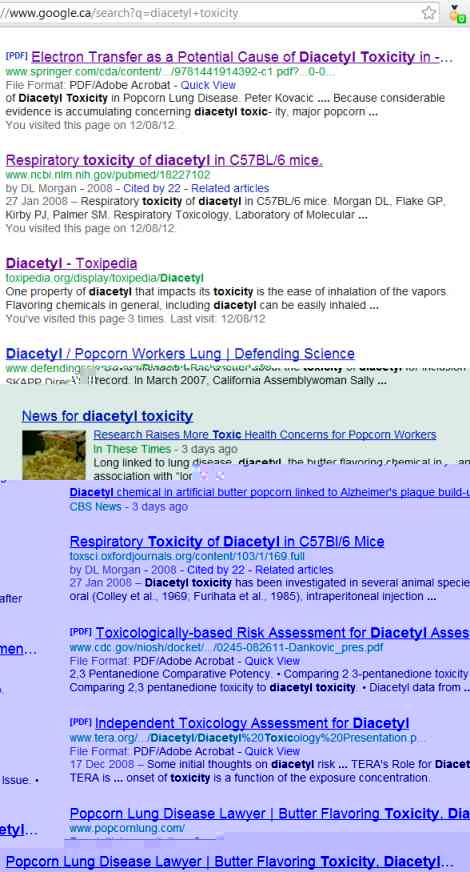
Search "diacetyl toxicity"


Notice links to fatal lung disease among factory workers handling butter flavor stuff, and also reports of neurological Alzheimer's like symptoms:

Article: "Butter Popcorn Chemical Linked To Alzheimer’s"

Not much news in the mainstream press. Why people ever buy that corporate crap at all? Why not just use real butter?

Saturday, August 11, 2012

Glucose and epileptic seizures

.

Interesting paper, requires more discussion (to be added later):


Fructose-1,6-Bisphosphate Has Anticonvulsant Activity in Models of Acute Seizures in Adult Rats


A variety of observations suggest that decreasing glycolysis and increasing levels of reduced glutathione, generated by metabolism of glucose through the pentose phosphate pathway, would have an anticonvulsant effect. 

Glucose is the primary source of energy for the CNS. Imaging of children with Lennox–Gastaut and infantile spasms has shown decreased glucose utilization between seizures and excessive glycolysis immediately before, and during, seizures (Chugani and Chugani, 1999). 

Evidence suggests that the changes in glucose metabolism and decreased glutathione levels observed in the brains of patients with epilepsy favor the generation of each seizure. First, hyperglycemia has been associated with seizure activity (Schwechter et al., 2003Lammouchi et al., 2004), whereas relative hypoglycemia has been shown to have an anticonvulsant effect (Greene et al., 2001). Second, the ketogenic diet (KD), which provides energy substrates for the brain that bypass glycolysis, has been shown to be an effective treatment for seizures (Freeman et al., 2007). Finally, animals with low levels of GSH have a low seizure threshold or spontaneous seizures (Wu et al., 2004).

[add discussion]

Saturday, June 2, 2012

Unknown keto+glucose oxygen-sparing metabolism?

.
I came across this in the following papers. May be a false lead, may be not.

"Cerebral metabolic adaptation and ketone metabolism after
brain injury", Mayumi L Prins, 2008


"In vivo 13C NMR studies of compartmentalized cerebral carbohydrate metabolism", Rolf Gruetter, 2002

"Brain Metabolism during Fasting", 0.E.OWEN et al., 1967

The papers review ketone and glucose metabolism in brain tissue. Among many of the issues discussed one finds that at a time of trauma, injury, hypoxia or during birth, brain tissue switches to some unspecified (unknown?) type of metabolism characterised by:
  1. increased processing of glucose through the pentose phosphate pathway (PPP),
  2. increased expression of ketone-metabolizing enzymes,
  3. relative reduction of oxygen use and CO2 release, in comparision with the overall rate of metabolism.
It is important to notice that PPP, as described in the literature is a pure glucose pathway oxydative-reductive (oxygen-sparing as compared with the normal glucose oxidative pathway) that is normally associated with NADPH production, used in reductive biosynthesis reactions within cells (e.g. fatty acid synthesis, RNA, cholesterol etc). Based on the known biochemistry, PPP is not supposed to have anything to do with ketone bodies or fatty acid metabolism in general.

Ketone metabolism on the other hand is not oxygen-sparing at all! A simple stoichometric analysis indicate similar oxygen usage per calorie compared with glucose oxidation (but with a significantly reduced carbon dioxide production!).

It is very hard to reconcile 1 and 2 with 3 unless one postulates that a new yet unnamed metabolic process is taking place that oxidizes ketone bodies and at the same time reduces (i.e. takes oxygen out of) glucose, with PPP being a side effect.  (It cannot be the traditional anaerobic glucose metabolism because of the reported deficit of lactate)

Quotes (first paper):
Although glycolytic activity is 38% greater in adults than fetal brain, the processing of glucose through the pentose phosphate pathway was 164% higher within the fetal brain compared with adults.
Hypoxic injury reduces oxygen availability and thus decreases oxidative glucose metabolism resulting in increased lactate production. High tolerance to hypoxia has been associated with increased plasma ketone levels...
In addition to neuroprotection from seizures, administration of ketones has been shown to provide protection after hypoxia/ischemia (Table 3).

My comment:

- hard to reconcile with the known metabolism of ketones which requires similar amount of oxygen as glucose (per calorie).

Quote (second paper):
The landmark study by Fox and Raichle in the late 1980s suggested that there is indeed a large increase in glucose metabolism that exceeds the changes in oxygen metabolism (Fox et al., 1988). The concept of uncoupled oxygen metabolism has been supported by reports of small increases in brain lactate during focal activation (Prichard et al., 1991), that initially were very controversial (Merboldt et al., 1992) and that are very difficult to perform. The relatively small magnitude of change in brain lactate is difficult to reconcile with the reported large uncoupling between oxygen and glucose consumption (Madsen et al., 1999).
My comment:

- a well known anaerobic (no oxygen) metabolism involves conversion of glucose to lactate, thus the lack of lactate, is the paradox indicating an unknown oxygen-sparing pathway.

Quote (third paper):

...as stated before, 2.81 mmoles/liter of CO2, should have been produced, with a theoretical respiratory quotient of 0.92 instead of the observed 1.90 mmoles/liter, resulting in a quotient of 0.62. To our knowledge, this deficit in CO2 production can only be explained by a carboxylation [see wiki] reaction with the venous effluent transporting the CO2 in a form not liberated by the acidification used in the standard manometric technique for determination of CO2 and HCO3.   According to most observations, the respiratory quotient of brain, which glucose serves as sole energy source, is close to unity (2,3,25). Brain, however, contains enzymes for all the major metabolic pathways (29-31), including fixation of CO2 (31,32); and oxidation of keto acids has been demonstrated in vitro (30,33,34). In addition, Kety et al. (35) noted decreased respiratory quotients in patients in diabetic ketoacidosis; but direct utilization of keto acids has not been found in this condition (3) or in fat-fed animals (36). Guettstein et al. also observed decreased respiratory quotients in patients with cerebral arteriosclerosis (37). Additional indirect evidence for a novel carboxylation reaction which would result in a low quotient has been Sacks' studies on glucose-14C oxidation in human brain whereby only 50% of glucose-carbon that is oxidized is recovered in effluent CO2 and HCO3,(38).

My comment:

Reduction of respiratory quotient to 0.62 meant that the process releases less CO2 than should have been base don the known and expected metabolic pathway. That indicates that the unknown metabolic process does not oxidize carbon to CO2 but leaves it in the residua, while probably (speculating) oxidizing only the hydrogen from ketone bodies with the oxygen atoms reduced from glucose. The result is less need for external oxygen input and less CO2 production. (Mental note: next post about Dr. Jan Kwasniewski!)

(Kudos for Dr. Dav0 for pointing out those papers, and his work on ketone metabolism, please keep it up!)
.

Sunday, May 27, 2012

Obesity not always tied to higher heart risk

.
And lack of obesity is not a protection. The study confirms that obesity and metabolic syndrome are most likely unrelated causually, although may be coincidentally correlated to some extent.

A new UK study is discussed here.

Quote:

"People with good metabolic health are not at risk of future heart disease -- even if they are obese," Hamer told Reuters Health.

On the flip side, the non-obese in poor metabolic shape face as much risk as the unhealthy obese, the researchers concluded.

The findings, published in the Journal of Clinical Endocrinology & Metabolism, are based on more than 22,000 middle-aged participants in national health studies conducted in England and Scotland.

According to the researchers, the results suggest that metabolic factors may be more important in predicting a person's risk of cardiovascular disease than excess body weight in itself.

Sunday, May 20, 2012

Eat fructose - go bananas...

.
... but add egg yolks, fish oil and organ meat and be sane again!  That seems to be the message of the  following Forbes' article and the study[1]:

Sugar Makes You Stupid, But Omega-3s Will Smarten You Back Up

A short digest:

Though we may not have fully come to terms with it, in theory we know that high-fructose corn syrup (HFCS) is an adversary of health. Lots of work has been done looking at the effect of fructose on weight, liver function, diabetes risk, and even the growth of cancer cells. But not much has looked at the role of fructose in brain function, until now. Researchers have just reported that among the list of bodily ills that fructose contributes to, it may also "make you dumb." Luckily, eating a diet rich in the healthy omega-3 fatty acids seems to counteract this phenomenon.
...

"The DHA-deprived animals were slower," said study author Fernando Gomez-Pinilla, "and their brains showed a decline in synaptic activity. Their brain cells had trouble signaling each other, disrupting the rats’ ability to think clearly and recall the route they’d learned six weeks earlier."
...
Gomez-Pinilla suggests that fructose might somehow block insulin’s effect on brain cells, and specifically how it signals neurons to store and release the sugar that is needed for the brain to function efficiently – and for us to think crisply and clearly.
Mrs. Walton would probably lose her contributor status with Forbes if she didn't add this comment:

The important thing to remember is that not all fructose is created equal. "We’re not talking about naturally occurring fructose in fruits, which also contain important antioxidants,"
I wonder, are we according to her, supposed to consume those "superhealthy" fruit but just somehow spit fructose out?      :)


Yes! We Have No Bananas, 1923

----------------------
Reference:

1. "Metabolic syndrome" in the brain: Deficiency in omega-3-fatty acid exacerbates dysfunctions in insulin receptor signaling and cognition, Rahul Agrawal and Fernando Gomez-Pinilla

Sunday, May 6, 2012

Eggs and cardiovascular mortality

.
It has been recently reported (see for example this) that:

A Harvard study of over 21,000 male physicians found that men who ate up to 6 eggs a week had no increase in their rate of death. But once they ate a seventh egg, their risk of death went up 23%. The men were studied over a 20-year period...
However, when one looked at the data in more details, a completely different picture emerges.  See for example this study.

It turns out that the group that ate ≥7 eggs per week (the highest bin) happened also to have more than twice (4-2 times)  the rate of diabetes (and were older) compared with the lower egg bins!  See Table 1.   Since diabetes t2 increases the risk of death by a factor of 5 (5 to 10) , this factor alone may explain an increase in the death risk among the 7 egg group!

The death risk was about the total mortality.  There was a statistically marginal increase in total mortality in the highest group (see Table 4) but it wasn't confirmed neither by the MI risk (Table 2  - in fact the risk goes down!)  nor by stroke (Table 3 - the risk stays the same).   Unfortunately the authors do not mention what were the 7 egg group dying from.

 This may have nothing to do with eggs but everything to do with diabetes!

Other studies not only fail to confirm that eggs correlate with cardio-vascular risk, but show in fact some  risk reduction, especially significant in case of stroke!  See for example this  or that study.

Monday, April 30, 2012

Low IGF-I activity and a high stroke risk in vegans

.

"IGF-I activity may be a key determinant of stroke risk--a cautionary lesson for vegans.", McCarty MF.

(Quoting here the first half of the abstract describing facts leaving out the second part containing some wishful thinking.)

Abstract

IGF-I acts on vascular endothelium to activate nitric oxide synthase, thereby promoting vascular health; there is reason to believe that this protection is especially crucial to the cerebral vasculature, helping to ward off thrombotic strokes. IGF-I may also promote the structural integrity of cerebral arteries, thereby offering protection from hemorrhagic stroke. These considerations may help to explain why tallness is associated with low stroke risk, whereas growth hormone deficiency increases stroke risk - and why age-adjusted stroke mortality has been exceptionally high in rural Asians eating quasi-vegan diets, but has been declining steadily in Asia as diets have become progressively higher in animal products. There is good reason to suspect that low-fat vegan diets tend to down-regulate systemic IGF-I activity; this effect would be expected to increase stroke risk in vegans. Furthermore, epidemiology suggests that low serum cholesterol, and possibly also a low dietary intake of saturated fat - both characteristic of those adopting low-fat vegan diets - may also increase stroke risk. ...