2008 - Age of Awakening / 2016 - Age of disclosures / 2021 - Age of Making Choices & Separation / Next Stage - Age of Reconnection and Transition! /
2024 - Two millenia-old Rational Collectivist societal cycle gives way to the Self-Empowered Individualism. /
2025 Golden Age begins
Global narratives and "theories of everything" are always false! Only Personal Narrative is true!

Tuesday, January 25, 2011

Low-energy diets render motor neurons vulnerable to degeneration

.
This paper is a bit old but I am posting it to keep it in focus for a discussion.   Please notice that low fat vegan diets often tend to be "low energy"!

Mattson MP, Cutler RG, Camandola S. Energy intake and amyotrophic lateral sclerosis. Neuromolecular Med. 2007;9(1):17-20

Abstract

Roy Walford, a physician and scientist who pioneered research on the anti-aging effects of caloric restriction and subjected himself to a low-energy diet, recently died from amyotrophic lateral sclerosis (ALS). Information from his case, epidemiological findings, and recent controlled studies in mouse models of ALS suggest that low-energy diets might render motor neurons vulnerable to degeneration, whereas high-energy diets are ameliorative. This contrasts with the effects of low-energy diets on various neuronal populations in the brain that respond adaptively, activating pathways that promote plasticity and resistance to disease. One reason that motor neurons might be selectively vulnerable to low-energy diets is that they are unable to engage neuroprotective responses to energetic stress response involving the protein chaperones, such as, heat-shock protein-70 [*].


--------------------------

*) In addition to that, ketone bodies (often very low on low-energy diets) would have been protective against neural damage caused by the stress response, see:
Ketone bodies protect neurons from stress hormone-induced damage

------- added 28/01 -------------------

This video  http://www.youtube.com/watch?v=K-PzhyTlODc illustrates what kind of diet did Dr. Walford followed for about 10 years before his death (see around 7m into video). 


Vegan promoter warns vegans against Parkinson's!

.

This is 2 years old, I just rediscovered it in my heretical files.  Worth reading.

-------------------

From Dr. Fuhrman's latest e-mail [around Apr 02, 2009] :

Leaders of the Vegan Movement Develop Parkinson's: Case Studies

Herbert Shelton (1895 - 1985) a naturopath and chiropractor and the influential founder of the American Natural Hygiene Society and Nature Cure movement in America and prolific health writer advocated a natural food vegetarian diet of mostly raw fruits, vegetables and nuts. I read all of his highly motivating books, newsletters and writings in my teens. He lived in Texas, was physically fit, grew lots of his own food and ate carefully and fasted periodically. Of course he did not get cancer, he did not get heart disease, but he died of Parkinson's disease and was so severely affected by the age of 78 that even walking was difficult. In 1973 when I met him he was already severely hunched over and had a difficult time walking and caring for himself. Though he lived many years with this significant disability, the quality of his later years was extremely poor.

Prominent Vegetarian and Health Advocate - this leader in the natural health movement and a personal friend to me also suffered from and eventually died from a fall related to his Parkinson's disease. During his young adult life he embarked on the path of healthy living and vegetarianism. A follower of Shelton's works, he operated a large health food store, one of the first to sell organic fruits and vegetables in America; he became a leader in the health food industry. Of course he was not at risk of cancer or heart disease with his excellent diet, but he developed Parkinson's which limited the quality of his later years.

When he was developing his Parkinsonian tremors, I ordered blood tests and was shocked to see his blood results showing almost a zero DHA [*] level on his fatty acid test, in spite of adequate ALA consumption from nuts and seeds eaten daily. I had never seen a DHA level that low before. Since that time I have drawn DHA blood levels on other patients with Parkinson's and also found very low DHA levels.
Was it a coincidence, that these leaders in the natural food, vegetarian movement, who ate a very healthy vegan diet and no junk food would both develop Parkinson's? I thought to myself--could it be that deficiencies in DHA predispose one to Parkinson's? Do men have worse ability to convert short chain omega-3 into long chain DHA? Is that why Parkinson's affects more men than women? Is there evidence to suggest that DHA deficiencies lead to later life neurologic problems? Are there primate studies to show DHA deficiencies in monkeys leads to Parkinson's? The answer to all of these questions is a resounding, yes. 

....
 [read further on  http://www.drmcdougall.com/forums/viewtopic.php?t=11105 ]

-----------------------

*) DHA - Docosahexanoic acid, omega-3 type of fat commonly present in animal produce, especially in brain, spinal cord, nerves and egg yolks.  This type of fat is generally not present in plant based products, with very few exceptions (some algae).

In addition, a high carb nutrition would probably offer less natural protection against neuro degenerative diseases because of low level of ketone bodies.  For example non-ketogenic diet would be less protective against stress-induced neural damage, see:  Ketone bodies protect neurons from stress hormone-induced damage
.

Saturday, January 22, 2011

46% sugar diet causes breast cancer...

.

Underfunded Scientists Force Lipstick-Covered Rat With Cancer To Run Through Maze

... in mice, as medical "scientists" have recently discovered in this study.   Strangely, that is not what they officially concluded, that's why I put the word in quotes!   The lethal mice diet consisted of 46% of sugar (31% sucrose + 10% maltodextrin + 5% dextrin), 21% of milk fat and 19% of casein.   Read more about that in this post by Denise Minger.

Heretic
---------------------------------

"... a flea without legs cannot jump when told, because it cannot hear - concluded the leading biologist Professor Lysenko"  (old Soviet joke) 

"You need a computer to obfuscate things properly but to really foul things up you need a scientist!" (anonymous, 1960-ties)

The Myths of Losing Weight

.
(From Wiki)

Short Reader's Digest interview with Gary Taubes, for people who like "executive" summaries.

Another "executive" summary by Eric Westman: Limit Your Carbs and Lose Weight.

.

Friday, January 7, 2011

Low fat diets could increase heart disease risk...

... say nutrition experts.

Home-made(*) pork lard. Obviously, it has to be good!

Saw this article link on THE SPARK OF REASON blog (thanks!).

The article describes a symposium called "The Great Fat Debate: Is There Validity In the Age-Old Dietary Guidance?" at the American Dietetic Association’s (ADA) Food and Nutrition Conference and Expo. It would have been a usual boring scientific waffle following a vacuous hedge-all-bets type of philosophy, had it not been for some quotes of Dr. Walter Willett's presentation. He is one of the few prominent medical officials (director) not following the "speak but say nothing" strategy. At least not since a couple of years ago.

Quotes (of Dr.W.Willett):

"If anything, the literature shows a slight advantage of the high fat diet," he said. "The focus on fat in dietary guidelines has been a massive distraction. ... We should remove total fat from nutrition facts panels on the back of packs."

He added that while the pervasive dietary guidance given to consumers has been to eat fats sparingly, to load up on starch and eat non-fat products, "the food industry quickly realized sugar was cheaper than fat and laughed all the way to the bank."

And assistant professor of medicine at Harvard Medical School Dr. Mozaffarian:

... agreed with the other speakers about a lack of evidence linking total fat consumption and cardiovascular disease risk.

___________________
Footnote:
*) Chop pork belly into finger-sized slices or mince, put in a slow-cooker overnight, sieve-out the cracklings from liquid lard, while hot. Pour to plastic tubs. Feed the cat.
.

Friday, December 24, 2010

Mainstream media hinting that Atkins was right!

.

A reversal on carbs

I am going to put a big quote from this article, since it puts this better than any abstract of mine would have done:

Fat was once the devil. Now more nutritionists are pointing accusingly at sugar and refined grains....


Carb consumption has risen over the years. So have U.S. obesity levels. (Kirk McKoy / Los Angeles Times) ...


Most people can count calories. Many have a clue about where fat lurks in their diets. However, fewer give carbohydrates much thought, or know why they should.


But a growing number of top nutritional scientists blame excessive carbohydrates — not fat — for America's ills. They say cutting carbohydrates is the key to reversing obesity, heart disease, Type 2 diabetes and hypertension.


"Fat is not the problem," says Dr. Walter Willett, chairman of the department of nutrition at the Harvard School of Public Health. "If Americans could eliminate sugary beverages, potatoes, white bread, pasta, white rice and sugary snacks, we would wipe out almost all the problems we have with weight and diabetes and other metabolic diseases."


It's a confusing message. For years we've been fed the line that eating fat would make us fat and lead to chronic illnesses. "Dietary fat used to be public enemy No. 1," says Dr. Edward Saltzman, associate professor of nutrition and medicine at Tufts University. "Now a growing and convincing body of science is pointing the finger at carbs, especially those containing refined flour and sugar."


Americans, on average, eat 250 to 300 grams of carbs a day, accounting for about 55% of their caloric intake. The most conservative recommendations say they should eat half that amount. Consumption of carbohydrates has increased over the years with the help of a 30-year-old, government-mandated message to cut fat....


The first sign of insulin resistance is a condition called metabolic syndrome — a red flag that diabetes, and possibly heart disease, is just around the corner. People are said to have the syndrome when they have three or more of the following: high blood triglycerides (more than 150 mg); high blood pressure (over 135/85); central obesity (a waist circumference in men of more than 40 inches and in women, more than 35 inches); low HDL cholesterol (under 40 in men, under 50 in women); or elevated fasting glucose.


About one-fourth of adults has three or more of these symptoms.


"Put these people on a low-carb diet and they'll not only lose weight, which always helps these conditions, but their blood levels will improve," Phinney says. In a 12-week study published in 2008, Phinney and his colleagues put 40 overweight or obese men and women with metabolic syndrome on a 1,500-calorie diet. Half went on a low-fat, high-carb diet. The others went on a low-carb, high-fat diet. The low-fat group consumed 12 grams of saturated fat a day out of a total of 40 grams of fat, while the low-carb group ate 36 grams of saturated fat a day — three times more — out of a total of 100 grams of fat.


Despite all the extra saturated fat the low-carb group was getting, at the end of the 12 weeks, levels of triglycerides (which are risk factors for heart disease) had dropped by 50% in this group. Levels of good HDL cholesterol increased by 15%.


In the low-fat, high-carb group, triglycerides dropped only 20% and there was no change in HDL.


The take-home message from this study and others like it is that — contrary to what many expect — dietary fat intake is not directly related to blood fat. Rather, the amount of carbohydrates in the diet appears to be a potent contributor.


"The good news," adds Willett, "is that based on what we know, almost everyone can avoid Type 2 diabetes. Avoiding unhealthy carbohydrates is an important part of that solution." For those who are newly diagnosed, he adds, a low-carb diet can take the load off the pancreas before it gets too damaged and improve the condition — reducing or averting the need for insulin or other diabetes meds.


Americans can also blame high-carb diets for why the population has gotten fatter over the last 30 years, says Phinney, who is co-author of "The New Atkins for a New You" (Simon & Schuster, 2010).


"Carbohydrates are a metabolic bully," Phinney says. "They cut in front of fat as a fuel source and insist on being burned first. What isn't burned gets stored as fat, and doesn't come out of storage as long as carbs are available. And in the average American diet, they always are."


Here's how Phinney explains it: When you cut carbs, your body first uses available glycogen as fuel. When that's gone, the body turns to fat and the pancreas gets a break. Blood sugar stabilizes, insulin levels drop, fat burns. That's why the diet works for diabetics and for weight loss.


When the body switches to burning fat instead of glycogen, it goes into a process called nutritional ketosis. If a person eats 50 or fewer grams of carbs, his body will go there, Phinney says. (Nutritional ketosis isn't to be confused with ketoacidosis, a dangerous condition that can occur in diabetics.)


Beyond the fat-burning effects of ketosis, people lose weight on low-carb diets because fat and protein increase satisfaction and reduce appetite. On the flip side, simple carbs cause an insulin surge, which triggers a blood sugar drop, which makes you hungry again.


"At my obesity clinic, my default diet for treating obesity, Type 2 diabetes and metabolic syndrome is a low-carb diet," says Dr. Eric Westman, director of the Lifestyle Medicine Clinic at Duke University Medical Center, and co-author of the new Atkins book. "If you take carbohydrates away, all these things get better."

See also this:

Was Atkins Right? Scientists Say Carbs -- Not Fat -- Are the Biggest Problem with America's Diet

.

Tuesday, November 30, 2010

Study: add more carbs be more hungry!

.
A new study: "A Paleolithic diet is more satiating per calorie than a Mediterranean-like diet in individuals with ischemic heart disease"

What is remarkable about it, is that the patients felt more satiated and thus ate automatically 24% less by their own choice, and the only major difference between the two tested diets was the amount of carbohydrates (grains)! Everything else was very similar.

Think about it: both groups eat some typical basic foodstuff, then just let one group add 82g more carbohydrates (grains!) plus 13g more fat (oil) per day and what is the main result? - THEY FEEL MORE HUNGRY!

.

Saturday, November 27, 2010

Definition of money and the time-symmetry


.

A few thoughts:

1) Gold Money = Past Work.

A money system that is 100% backed by tangible products such as gold or by some real consummer produce such as food, cars, seashells etc is the symbol or equivalent substitute of work done in the past. A found pot of Roman gold coins represents work done by some people 2000 years ago. To create a monetary system like that you first have to mine out and accumulate some gold, copper etc or make some products and then you can have a "money" backed by it. It is mildly deflationary (in a harmless way, probably) since the amount of goods and products generally accumulates faster than gold.

A monetary system based on the assets produced in the past is inherently stable for the same reason that the automation control systems based on the "feed-forward" principle (as opposed to "feed-back") have to be. That is because past products are inherently more solid that the promise of future products! (I was just about to write "because the Past is Immutable" but on the second thought decided not to).

It's downside (or perhaps an advantage?) is the fact that it is very difficult to generate new investment credit and lend money very quickly for large projects, other then through a slow process of accumulation of capital. In particular, it is very difficult for governments and large corporations to obtain large amounts of capital without direct taxation or outright confiscation of capital from productive business entities. Such activity cannot be easily concealed by authorities and if attempted, it would be declared illegal as well as incompatible with the democratic principles. This type of monetary system probably enforces honesty and encourages work-oriented culture (if backed by the effective legal system). This is probably the main reason why the gold backed monetary system was first subverted and finally abolished by most governments.

2) Debt Money = Future Work.

Money based exclusively on debt is the present equivalent substitute of a work promised, a work that will be done in the future. Other than this difference, the system works (initially) the same way as #1! It is typically mildly inflationary because it is always easier to borrow more and generate excessive debt. The system tends to generate more of the debt-backed money, than can be reasonably predicted to be covered by the productive work in the future. In addition to the inherently poor money issuance control, unpredictable disasters or business failures tend to undermine a balance tilting it towards inflation.

When the future comes and some debt proves to be defaulted, then the equivalent amount of debt-backed money must by law be destroyed. This 'must' NEVER happens! It's a Keynesian's fallacy, for example that a government is supposed to be counter-cyclical, restraining its spending during a boom. In theory it must be done but never gets done! At least, not when the big governments run by incompetent collectivists have their way! :)

Eventually, excessive unbacked phantom money keeps accumulating because nobody is destroying it! Nobody likes becoming the first one to burn their paper banknotes, admit that their bonds (held or issued) are worthless etc. In the event of mass defaults, business closures or just corporate downsizing, the debt-backed monetary system seems to give all players an incentive to maintain a fiction and pretend that the paper assets backed by the defunct debt still have some value. It encourages the players to cheat, and punishes honesty. This honesty disincentive is also compounded by massive leverage through banking lending multiplier (it's name is '33') and derrivatives (I think the system would probably still remain inherently unstable even without the multipliers and derrivatives).

The main advantage (or perhaps its main fault) is the fact that it is very easy to generate additional credit to finance some urgent projects or startups. It's main alure is probably the fact that the very large players such as governments and some very large corporations, may generate and use gigantic amounts of new credit/money without actually producing anything useful co-measurate with the amount of resources they are appropriating. They can do all that in plain view without breaking any law, and without breaking principles of democracy.

3) Present Time Money

Can Present Money be defined as the average of #1 and #2?  One can envisage a 50%-50% mixture (or similar ratio) of both forms of money-backing asset classes (hard assets from the past or gold,  plus debt counted as an asset), but it is not really equivalent to any product being produced in the present! The 50-50 money backing scheme has no relation to the current work being done in the present time! Such monetary systems have been used in the past and are called "fractional reserve gold backed currency". It is like standing on two boats with one foot in each.

I think, the nearest equivalent of a "money" system that reflects a work being done in the present time is barter - which in fact uses no money at all! Such a system did work in the past, but only in a very primeval economy. Could such a system have worked in an industrialized economy such as during the Industrial Revolution in the last 200 years? Absolutely not! Would such a system work in the future information based economy? Perhaps, I don't know but I would not exclude a possibility that it may work!  We have to get used to a habit of challenging the old "wisdoms" because the new ways of global information access make certain formerly impractical ideas possible, for example a direct democracy! I have a gut feeling that this could be the key point behind the future economic revival!

I think, that kind of systemic classification based on the symmetry patterns is always helpful in science, it may even have some predictive power.
.

Friday, November 26, 2010

Drug trial success - anacetrapib did not kill significantly more than placebo!

.
This is great news for Merck regarding their new HDL-boosting-LDL-busting drug Anacetrapib.  Published about a week ago:

Safety of Anacetrapib in Patients with or at High Risk for Coronary Heart Disease

Quote: "The prespecified Bayesian analysis indicated that this event distribution provided a predictive probability (confidence) of 94% that anacetrapib would not be associated with a 25% increase in cardiovascular events, as seen with torcetrapib."

See also this:

Merck’s Risky Bet on Heart Drugs May Yield Lipitor-Like Success

Interestingly, the company's stock declined by about 5% in November to date.
.

Tuesday, November 16, 2010

Lack of social skills made us human

.
[Part 2 of 2]

Continuing on Sapolsky's lecture, see this video:


Robert Sapolsky: Stress, Neurodegeneration and Individual Differences


About 50 minutes into this lecture, Sapolsky changes slightly the subject and describes his stress research on baboon monkeys in Africa, describing their society's structure and detailed habits. This was discussed in the context of biochemistry and stress hormones (glucocorticoids), with blood samples taken and analyzed, correlated within the context of the social interaction. Over 20 years of solid experimental and observational research, really impressive piece of work!

Brief summary.

Baboons in the reserve (Serengeti) need only about 3 hours a day to gather their food. They live in baboons' paradise, their health is good and infant's mortality is lower than among neighboring human villages. They spend the rest of the day, 9 hours every day on average making each other miserable and stressing each other to the limits of their adrenal biochemistry, using social interplay, emotional and physical harassment. They follow a very elaborate and rigid social hierarchy with a strong male gang leader and a score of lesser levels. At each position within the gang, a member is continuously subjected to harassment and being picked on by higher member, while at the same time, they are compelled by their biology to release their own stress by picking, incessantly upon the weaker members of lesser position.

I strongly recommend to watch this video to give you a better idea what it is really like. I have to admit I couldn't help by noticing how similar is their structure to the structure of the human subculture in:

- criminal gangs
- government institutions,
- large corporations
- armed forces and paramilitary organizations,
- large religious institutions
- academic institutions

Comments and thoughts

If one ever wondered about any of the above cultures, then watching Sapolsky's video will neatly illustrate what is that all about. In contrast, one wonders what kind of culture would rather protects the weaker members and work creatively to build tools, shelters and grow food rather then spend all their time on social warfare? I think, it can't possibly be a culture solely focused on social interplay, with a rigid hierarchical structure. I think the pattern is the same, regardless whether we are dealing with intelligent humans or monkeys. The main dichotomy is I think clear: a group either focuses most of their free time on perfecting the social interaction and learning practical social manipulation skills to the detriment of other skills, or it follows a decentralized model allowing their members to develop and use individual skills in creating technology, art and science (individuals being free to keep the results of their work!). This dichotomy can be seen in both individual characters and on the scale of the herds, tribes, societies or countries. This dichotomy is expressed in two different approaches towards problem-solving. For example, take a lack of something like food: one approach is to steal food from others. The second approach is to search or grow more food - to fix the actual problem! Another example that we keep hearing so often is energy and resources' shortage. The "monkey" way would be for Mr. Leader to make me and you use less energy, while conserving what is left for his elite friends and his electorate. The other less fashionable but natural human way is to use technology to tap into a source of energy that is thousands of time more abundant than oil or coal. One mindset is about controlling the people; the other is about controlling the environment.

Coming back to the title of this note: I think there is a snowball-in-hell chance that any society behaving along the pattern described in Sapolsky's lecture on baboons, would ever develop technology, art or science. It is also doubtful, if they ever managed to capture the fruit of modern civilization by force, that they would be able to keep and maintain those achievements!

The fact that humans did achieve a highly developed technological civilization means that the periods of herd-like rigid hierarchical social structures must have been a rare anomaly rather than the rule! Otherwise we probably would never evolve creative skills and would be living today in a tropical "paradise" living off wild fruit and spending our time plotting how to became "herd-managers".

No it is not the society and the social skills that made us human, it was the lack of it! Those who spend their time partying and socializing create no wealth and no value. Those who tinker, build, experiment and learn science - do! It was the "nerddom" that drove us forward while social skills held us backwards towards social competition, stress, warfare and death.

[see also Dozent's comment underneath]

-------
(Style and grammar edited 7/02/2011)
.

Monday, November 15, 2010

Ketone bodies protect neurons from stress hormone-induced damage

.
[Part 1 of 2]

This is inspired by this video presentation:

Robert Sapolsky: Stress, Neurodegeneration and Individual Differences


Scrolling to minute 26 of the video, reveals a slide summarizing the results of an experiment, where neural tissue was exposed to an "insult" (damage cause) equivalent to hypoglycemia.


The degree of damage to the neurons was asessed in volume units (vertical) while the 4 cases are represented by color bars:

green - damage caused solely by the original "insult"
yellow - damage caused by the "insult" in the presence of glucocorticoid (stress hormone)
red - damage caused by the "insult" in the presence of glucocorticoids and mannose sugar
white - damage caused by the "insult" in the presence of glucocorticoids and ketone bodies (beta-hydroxy-butyrate)

What do I make out of that? Basically, it shows that not only ketone bodies work better as the energy source than mannose sugar, but also protect against the damage caused by both factors combined: hypoglycemia and glucocorticoid: - the white bar is smaller than the original green bar on the left!

[part 2 essay inspired by the same video will be titled "Lack of social skills made us human!" ]

Friday, November 12, 2010

Cow's milk formula triggers t1 diabetes, new study

.

Dietary Intervention in Infancy and Later Signs of Beta-Cell Autoimmunity

A journalist's write-up is here

Double-blind study on 230 infants with HLA-conferred susceptibility to type 1 diabetes and with at least one family member with type 1 diabetes, were split into test group fed casein hydrolizate based formula, and the control group fed conventional cow's milk based formula.

Autoantibodies to insulin, glutamic acid decarboxylase (GAD), the insulinoma-associated 2 molecule (IA-2), and zinc transporter 8 were analyzed, as well as monitored for the incidence of diabetes t1, until the age of 10.  

The risk of developing diabetes t1 markers in the casein hydrolizate group was substantially reduced - by  ~50%, compared with the control group reciving cow's milk formula!

-------------------
Updated (14-Nov-2010)   This is going to be a story of two food villains and one food hero.


There is more to milk that 1 paper. Much more: a study involving a billion people. The China study. I am going to dump some facts here for the reference.

My source of data is Mono Mortality document. A cursory look at all diseases with the focus on correlation with milk reveals that milk correlates positively with almost all diseases! The same cursory look reveals also that two other food items: wheat flour and eggs correlate very consistently too across most diseases,
one positively one negatively. Note: positive correlation means that an increase in consumption is associated with more disease and more harm, whereas negative correlation means an increase in consumption is associated with less risk of a disease. The main bullet points of this review are these:

* Wheat flour correlates positively with almost all diseases (except pulmonary TB in adults)

* Milk correlates positively with almost all diseases (except diabetes)

* Eggs correlate negatively with almost all diseases (except cancer, diabetes and IHD)

One should keep in mind that a correlation is no causuation, however the fact that milk and wheat and eggs correlate simultaneously and follow the same consistent pattern, albeit with different signs, may indicate that something real is going on in the human biochemistry in relation to those foods. This is a strong indication that more reseaarch should be made to investigate the effect. This is also a indictment against Cornell University that sat on such a rich set of data for a decade without doing anything usefull about it. (Other than letting one of their staff profesor hijack the study title to propagate his veganism!)


--------------

Here are some examples, I will list correlation factors from the above linked document, for disease mortalities against wheat, milk and eggs only.  Correlation factors are given as two digit numbers in percentage, followed by the food item.

M015 Pullmonary TB (age 0-34):+34 Milk , -27 Eggs
M016 Pullmonary TB (age 35-69): -29 Wheat
M018 Other TB (age 35-69): +52 Wheat, -30 Eggs
M023 All cancer (age 35-69): +31 Eggs
M043 Endocrine (age 0-34): -36 Eggs
M044 Endocrine (age 35-69): -31 Milk
M045 Diabetes (age 35-69): -29 Milk, +26 Eggs
M050 Mental (age 0-34): +75% Milk
M059 All Vascular (age 35-69): +56 Wheat, +29 Milk, -26 Eggs
M060 Rheumatic (age 0-34): +37 Milk, -35 Eggs
M061 Rheumatic (age 35-69): +26 Wheat, -32 Eggs
M062 Hypertension (age 35-69): +43 Wheat, +75 Milk, -28 Eggs
M063 Ischaemic heart d.(age 35-69): +59 Wheat, +25 Eggs
M065 Stroke (age 35-69): +43 Wheat
M066 All vasc excl stroke (0-34): +33 Wheat, +42 Milk, -43 Eggs
M067 All vasc excl stroke (age 35-69):+65 Wheat, +50 Milk, -33 Eggs
M068 All respiratory (age 0-34): +50 Milk, -27 Eggs
M069 All respiratory (age 35-69): - (no correlation) -
M070 Pneumonia (age 0-34): +51 Milk, -27 Eggs
M071 Pneumonia (age 35-69): -32 Eggs
M087 Pregnancy and birth: +41 Wheat, +49 Milk, -48 Eggs
M104 Maternal mort.: +38 Wheat, +46 Milk, -42 Eggs

.

Wednesday, November 10, 2010

Is modern wheat variety more toxic?

.
This time I am posting some blog links, to indicate an important issue that we should really pay a very close attention to:

 Dwarf mutant wheat

Why do morphine-blocking drugs make you lose weight?

The second link discusses the addictive opiate-like properties of wheat exorphines.

Very interesting discussions of metabolic and biochemnical effects of wheat:

Hyperlipid Blog


To complete the picture, here is another must-read article by Denise Minger on this subject:

The China Study, Wheat, and Heart Disease; Oh My!

Last but not least my own simple graph presentation of China study heart disease versus wheat consumption:

China Study says wheat is associated with vascular disease
.

Saturday, October 30, 2010

Scientists Find Liberal Gene?

.

UCSD Paper:
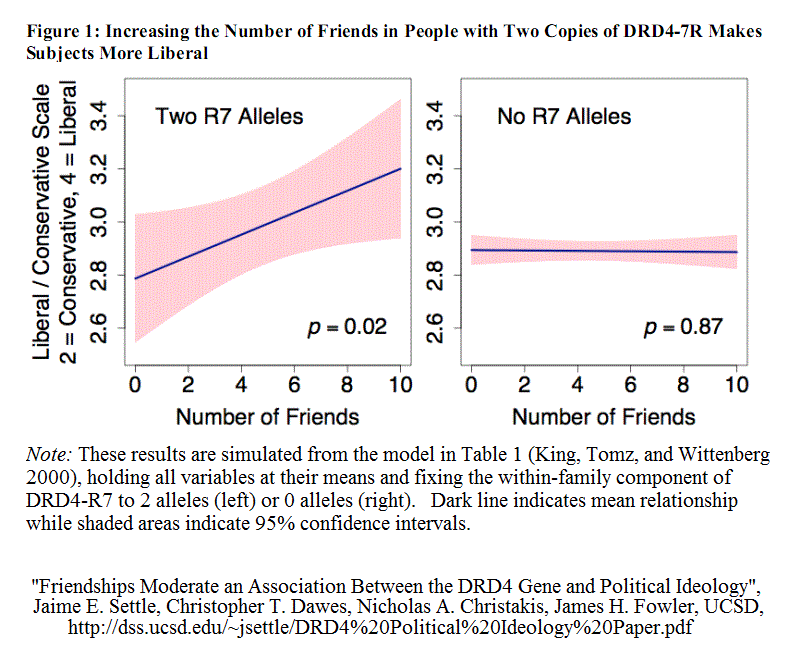
Friendships Moderate an Association Between the DRD4 Gene and Political Ideology
by Jaime E. Settle [jsettle at ucsd.edu], Christopher T. Dawes, Nicholas A. Christakis, James H. Fowler


Quotations:


"It is the crucial interaction of two factors - the genetic
predisposition and the environmental condition of having many friends
in adolescence - that is associated with being more liberal,”
according to the study.
...

Here, we link our understanding of the genetic basis of political ideology with
environmental factors known to influence political attitudes. We suggest that individuals with the 7R allele of the DRD4 gene, given certain environmental stimuli, are more likely to have a liberal ideology.

...
The 7R allele of the DRD4 gene is known to be associated with several haracteristics, such as increased extraversion, novelty-seeking, and sensation-seeking (Eichhammer et al. 2005).
...

In a landmark piece synthesizing five decades of research on conservatism and social-cognitive motives, Jost et al. (2003) assert a motivational basis for the stable, definitional core of conservative ideology, claiming that conservative ideologies are adopted in part to satisfy a variety of social, cognitive, and psychological needs. The authors write that people’s response to threatening environmental stimuli, such as fear and uncertainty, affects the development and expression of political beliefs concerning the core components of conservative ideology, such as resistance to change and acceptance of inequality (p. 366).

We would expect to find a negative correlation between traits associated with DRD4-7R and a conservative ideology if conservatives perceive new experiences as a threat and thus, to satisfy their psychological needs, they avoid novelty and sensation seeking. This has been demonstrated in the literature with sensation seeking (Kish and Donnenwerth 1972, Kish 1973), a taste for broad-mindedness (Feather 1979, Feather 1984), and openness to experience (Pratto et al. 1994, Jost and Thompson 2000, Peterson et al. 1997, Peterson and Lane 2001).
...

Novelty-seeking should not necessarily lead one to make more friends - those high in the 7R allele often exhibit certain asocial behaviors. Rather, the influence of a large number of friends could serve to develop social cognition (Staub 1995), create a better understanding of other’s needs (Niebrzydowski 1995) and greater consideration in regard to the society in which they live (Selman 1990, White et al. 1987), as well as increase expression of prosocial behaviors (Hartup 1993).
...
It is the combination of the desire for new experience and many different pathways to these experiences that we hypothesize has an impact on political ideology.

-----
(See also this article.)

I find it fascinating that a dychotomy between different types of characters comes out even through genetics!  It makes me think that a difference between the two classes of population goes deeper than just "liberal" and "conservative" views in the political sense. The authors identify the liberal view as the one associated with openess, curiosity and a willingness to embrace new experience, where as the conservative is described as perceiving new experiences as threats, thus, to satisfy their psychological needs, they avoid novelty and sensation-seeking, and tend to "accept inequality" - meaning acceptance of the class hierarchy and the authority I presume.

This is not quite the way I see it, based on my experience. Since I grew up in a communist state before moving to the West, I have noticed an awful lot of Western "Liberals" (in the American sense of this word) exhibiting anything but curiosity and openess, while some of the poster "boys" and "girls" of  Conservatism ("Neocons" as they are being fondly nicknamed), seem to have been more open to new ideas or willing to "rock the boat".


I think a more accurate way of political labelling is to use the European meaning for "Liberalism" = pro individual freedom. In the US language it would be called "Libertarianism". European Liberals have always been unafraid and willing to entertain new ideas while the European "Conservatives" were those interested in preserving the power of the oligarchies and their institutions thus any new ideas were generally regarded as harmful.  On the other hand, in the North America, the Conervatives seem to consist of an unworkable - "unholy" mixture of the European style Conservatives and Libertarians.

I see a much more fundamental split in the present society, along the lines of "open and individualistic" versus "closed and hierarchical" that fits the above described model better than the political divide. I wrote about that in the following posts:

Human regression, anthropology

Baby boomers' monkey business 

It is not just as much about socializing and having many friends versus being a recluse - it all probably depends whom you have to deal with! If one is mostly surrounded by the members of a not-ones-own types then obviously, that person isn't going to spent as much time socializing, as he/she would have liked. Each type is as sociable as the other one but on their own terms!  They probably perceive (mutually) any social or societal/civic/business activities of the other kind as boring, unnatural, fake or criminal.  I know I do!

.

Wednesday, October 27, 2010

Insulin, Glucose, Grim Reaper and Sweet Sixteen gene

.


Important new reasearch published just recently by Cynthia Kenyon, University of California, described in the following Oct-26,2010 Daily Mail article (Jerome Burne):

Can cutting carbohydrates from your diet make you live longer?

Quotes:


She made her remarkable breakthrough after studying roundworms, specifically the C.elegans, a worm just a millimetre in size that lives in soil in temperate climates all over the world. By tweaking some of their genes she has been able to help these worms live up to six times longer than normal. 'Not only that, but we also know how to make them stay healthy all that time as well,' she told an audience at the Wellcome Collection in London earlier this month.
...
Scientists already knew how to make laboratory animals live longer and healthier lives - you just cut back their calories to about three-quarters of their normal amount.  ... But what Professor Kenyon found out was why ­drastically reducing calories has such a remarkable effect. She discovered that it changed the way two crucial genes behaved. It turned down the gene that controls insulin, which in turn switched on another gene, which acted like an elixir of life.  'We jokingly called the first gene the Grim Reaper because when it’s switched on, the lifespan is fairly short,' she explains.  The ­second 'elixir' gene seems to bring all the anti-ageing benefits - its proper name is DAF 16, but it was quickly nicknamed 'Sweet Sixteen' because it turned the worms into teenagers.
...
Discovering the Grim Reaper gene has prompted the professor to ­dramatically alter her own diet, ­cutting right back on carbohydrates. That’s because carbs make your body produce more insulin (to mop up the extra blood sugar carbs ­produce); and more insulin means a more active Grim Reaper.  So the vital second gene, the 'elixir' one, won't get turned on.

To test this, last year she added a tiny amount of ­sugary glucose to the normal diet of some of her worms that had had their genes engineered so they were living much longer, healthier lives.  'The effect was remarkable,' she says. 'The sugary glucose blocked the ''youthful'' genes and they lost most of the health gains.'
...
Following Kenyon’s lead, other researchers started looking for the Grim Reaper/ Sweet Sixteen combination in other animals — and of course in humans.

They found it.

One clue came from a small remote community of dwarves living in northern Ecuador who are cancer-free. They are missing the part of the Grim Reaper gene that controls a hormone called insulin-like growth factor. The downside is they only grow to 4ft tall because the hormone is needed for growth.  But this missing bit of the Grim Reaper gene also means they don’t develop cancer and are less likely to suffer from heart disease or obesity.

Professor Jeff Holly, who specialises in insulin-like growth factor, confirms that it is linked to cancer of the prostate, breast and colon.  In fact raised insulin levels, triggered by high carbohydrate ­consumption, could be what ­connects many of our big killers. Research is at its early stage, but raised insulin triggers an increase in cholesterol production in the liver, makes the walls of blood vessels ­contract so blood pressure goes up and stimulates the release of fats called triglycerides (linked to heart disease).
...
'Carbo­hydrates, and especially refined ones like sugar, make you produce lots of extra insulin. I’ve been keeping my intake really low ever since I discovered this. I've cut out all starch such as potatoes, noodles, rice, bread and pasta. Instead I have salads, but no sweet dressing, lots of olive oil and nuts, tons of green vegetables along with cheese, chicken and eggs. I'll have a hamburger without a bun and fish without batter or chips. I eat some fruit every day, but not too much and almost no processed food. I stay away from sweets, except 80 per cent chocolate.'

--------------

Refs (older, not this one):

http://kenyonlab.ucsf.edu/html/history.html

http://kenyonlab.ucsf.edu/Kenyon_et_al_Nature.pdf


.

Sunday, October 24, 2010

Can Ireland exit EU and join US?

.
Something is happening, see the articles:

Soden: Let's quit EU and join US

Frederick Forsyth: Rise up, reclaim your country

Leaving the euro might well be our 'least bad' option

Mike Soden's [Irish Central Bank advisor] announcement is probably not accidental because of it's timing. This issue was simmering since 2008. Ireland jeopardised its sovereignty by assuming their private banking debt on call from Brussels, in return for some guarantees, as revealed through some leaks on David McWilliams forum, recently.

The fact that Soden chose now to speak out plus the rumors of a feud between Lenihan [fin.min.] and Cowen [prime min.], indicate that something bad is happening. My guess is that they are finding out to their surprize that those German and French "guarantees" are probably not as solid as they seemed 2 years ago (if it comes to foreign "guarantees" they should ask Poles - they may know something about that...).

Also, Lenihan has probably realized (by adding up all figures) that Irish economy will not recover on cutbacks alone. The reason is obvious to me or McWilliams - the lack of indigenous industry. A service based economy (with a notable exception of the Swiss banking phenomenon) cannot cut-back its way to prosperity, as Greeks are now finding out too.

[shocking economic heresy=on] You have to actually _produce_ something that other people would buy and charge competitive prices for that. [shocking economic heresy=off]

In my humble opinion, Ireland will not be able to solve it by exiting EU and joining US, going alone or with other alliances - the moment this happens, European banks will probably immediately pull out resources and loans from the Irish banks collapsing them and sinking the state. It is worse than Iceland - Iceland is small enough to survive being cut off, on cod fishing alone. Ireland is too big to do that and too small to do what the British are doing now.

Also, you can see here a classical example of "monkey" regressors' culture in action, among the Irish/EU ruling caste: when everything is well they cooperate, when "bananas" are lacking, they kick out the weakest members out of their herd.

------------------
Update 8-Nov-2010

Interesting articles:

THE BIG PICTURE: Ireland is effectively insolvent – the next crisis will be mass home mortgage default, writes MORGAN KELLY

Eoghan Harris: Public-sector wealth can only lead to private decay

-------------------
Update 11-Dec-2010

Interesting article:

Iceland safe, Ireland sorry?


.

Tuesday, October 19, 2010

Alzheimer's, B12 and homocysteine - vegans beware!

.


This is based on the newly published Scandinavian study:
Homocysteine and holotranscobalamin and the risk of Alzheimer disease

Quote:

Results: The odds ratios (ORs) (95% confidence interval [CI]) for AD were 1.16 (1.04–1.31) per increase of 1 µmol/L of tHcy at baseline and 0.980 (0.965–0.995) for each increase of 1 pmol/L baseline holoTC.

Notice how did the authors skillfully manage to conceal the impact (really huge!) - by not putting the risk ratio over the full range in the abstract. Instead they mitigated their grant-loosing risk by showing only an incremental change per 1umol/L or per 1pmol/L of the intependent varaibles. (Note: tHcy=homocysteine, holoTC=B12, AD=Alzheimer's Disease).

The impact seems to be huge indeed, based on some quick-and-dirty calculations of the typical tHcy and B12 variability among some populations. Taking two other studies (see [1] and [2] below) giving the average difference between vegetarians and non-vegetarians for tHcy and B12 ( 2.6 to 12.3 umol/L and -94 to -195 pmol/L respectively),   applying the above incremental ratios of (1.16 and 0.980 respectively) one obtains the estimated ralative risk ratio for AD for vegetarians versus non-vegetarians of: 1.5 to 6.2 based on the homocysteine, and 6.7 to 51 based on the B12 data.

(Disclaimer: risk ratio estimates that are based on statistical data do not prove nor disprove causuation.)

My conclusion: the study indicates that the B12 defficiency as well as (independently) high homocysteine seem to be very strong predictors of Alzheimer's disease risk. The overal risk estimate is also much stronger than the washed-out figures presented in the paper's abstract. This should be of utmost importance for vegans and vegetarians!

See also:


1. Effect of Vegetarian Diet on Homocysteine Levels

2. Plasma Homocysteine Levels in Taiwanese Vegetarians Are Higher than Those of Omnivores

3. BBC Health News: Vitamin B12 link to Alzheimer's backed by study

4. BBC Health News: Vitamin B 'puts off Alzheimer's'

.

Friday, October 15, 2010

red meat fights back

.
New meta study:

Red meat consumption: an overview of the risks and benefits.

Abstract:

Red meat is long established as an important dietary source of protein and essential nutrients including iron, zinc and vitamin B12, yet recent reports that its consumption may increase the risk of cardiovascular disease (CVD) and colon cancer have led to a negative perception of the role of red meat in health. The aim of this paper is to review existing literature for both the risks and benefits of red meat consumption, focusing on case-control and prospective studies. Despite many studies reporting an association between red meat and the risk of CVD and colon cancer, several methodological limitations and inconsistencies were identified which may impact on the validity of their findings. Overall, there is no strong evidence to support the recent conclusion from the World Cancer Research Fund (WCRF) report that red meat has a convincing role to play in colon cancer. A substantial amount of evidence supports the role of lean red meat as a positive moderator of lipid profiles with recent studies identifying it as a dietary source of the anti-inflammatory long chain (LC) n-3 PUFAs and conjugated linoleic acid (CLA). In conclusion, moderate consumption of lean red meat as part of a balanced diet is unlikely to increase risk for CVD or colon cancer, but may positively influence nutrient intakes and fatty acid profiles, thereby impacting positively on long-term health.

This blog article contains a long list of studies (with abstracts) on this topic.


.

Friday, October 8, 2010

U.S. Air Force Officers Recount Experiences With UFOs

.
ABC News article by KI MAE HEUSSNER, Sept.27,2010

Quote:
During a press conference at the National Press Club in Washington, D.C., seven former Air Force officers once stationed at nuclear bases around the country said that not only have UFOs visited Air Force bases, some have succeeded in disabling nuclear missiles stationed there.  ...

Why am I quoting this?  I don't know, though I am getting an impression that something is changing about the tone of the media outlets, regarding this particular topic.  Perhaps this fact is important!
.